
Home » Articles posted by OBERTO: Oxford Brookes Exploring Research Trends in Opera (Page 4)
Author Archives: OBERTO: Oxford Brookes Exploring Research Trends in Opera
The British Society for Eighteenth-Century Studies – Annual Conference
Immediately after attending the RMA Research Students’ Conference (see last OBERTO blog post), I boarded a train for Oxford and the British Society for Eighteenth Century Studies conference at St. Hugh’s College. The theme of this year’s event was ‘Pleasures and Entertainments’; the immense scope of ideas and research which the speakers contributed within this theme was astounding, including everything from the elite women athletes of the long eighteenth century to ‘spiritual alchemy’ and the pleasures which could be gained from writing and hearing sermons. Naturally, opera was a significant form of pleasure-seeking and entertainment in the eighteenth century. Opera, singers, celebrity, theatre design, opera-going and opera criticism in England and abroad were all topics of papers and discussion.
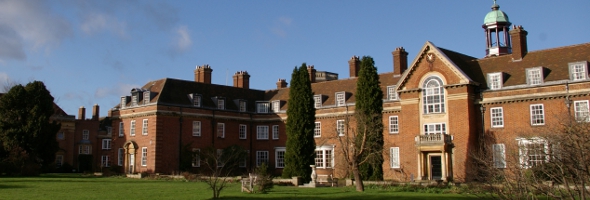
St. Hugh’s College, Oxford
The first panel I attended was ‘Opera, Court Cases and Scandal’. Olga A. Baird spoke about the late eighteenth-century composer Antonio Casimir Cartellieri and his ‘mysterious patron “Count Oborsky”’ and their activities in the Habsburg territories. A significant part of this paper concerned Count Michal Kazimierz Oginski, who was a patron of musicians in Vienna. At his palace in Slonim, Belarus, Oginski had his own theatre, a ballet company, and singers for regular opera performances. As a youth Obarsky spent time at the palace at Slonim, and through his association with Oginski he became a ‘pseudo-count’ and patron of musicians and composers, although he remains an enigmatic figure. Oginski’s remarkable theatre at Slonim, however, is evidence of the many places of opera performance based in remote provincial centres, purely for the entertainment of particular aristocratic patrons and their households.
After this, Bruce Alan Brown’s ‘Opera in France, Italy, and on the Moon, as Viewed by a Frenchman, Financier, and Philosophe’ examined another mystery – this time the authorship of the Lettresur le Mechanisme de L’Opera Italien (1756). This Lettre makes comparisons between Italian opera buffa and French tragédie lyrique, and questions whether Parisian audiences wanted Italian opera, if they knew why they wanted it, or if perhaps they feared it. The paper touched on the difficulties inherent in interpreting pseudonyms in opera criticism, and deducing whether this Lettre was written by an Italian or French critic. Bruce Alan Brown’s research also provides an alternative perspective on La Querelle des Bouffons, and how debates about operatic styles functioned as a substitute for more direct political debate in 1750s France.
Still in the 1750s, but moving over the Channel, Cheryl Duncan illustrated how records of court cases give us a remarkable insight into London’s musical life. The legal disputes between violinist Felice Giardini and John Cox – engraver, publisher, and perhaps also an instrument repairer – demonstrate what varied ‘portfolio’ careers musicians enjoyed or endured during this period. The main operatic link was through Giardini’s involvement with the King’s Theatre.
On Thursday morning I took advantage of being at such a diverse interdisciplinary conference by listening to Peter Radford speak about the astounding exploits of elite women athletes during the long eighteenth century, as well as Carolyn D. Williams’s paper on ‘card games and women’s “Intellectual Capacity”’, before attending the Mason Lecture. This year’s lecturer was Dr Jérôme Brillaud, whose ‘Parisian Pleasure Domes: Theatre Architecture and Sensory Pleasures in Eighteenth-Century France’ charted the changing design of French theatres between 1634 and 1784. In the seventeenth century, the examples of the Hôtel du Marais and the Hôtel de Bourgogne demonstrated the rectangular arrangement of these seventeenth-century theatres: sightlines (particularly in the loggia boxes) were compromised, and made the theatrical experience confrontational rather than creating the circular flow of energy which an amphitheatre style would encourage. Not until the late 1740s and 50s did French architects study ancient theatres, and the theorists’ fascination with Greek theatres stimulated a move towards creating theatres in France which would stimulate all the senses. Cochin’s 1765 grand plan for an auditorium with a truncated oval shape, promoting physical comfort for audience and actors alike, was never realised, but his design proved influential.
The amphitheatre design improved acoustics and sightlines, democratising – to an extent – the experience of attending the theatre, and provoking changes in acting technique. Brillaud then showed, with a series of exquisite slides, the private theatre of Mademoiselle Guimard (1772), Victor Louis’ theatre at Bordeaux, as well as the new ComédieFrançais. He pointed out that as the external design of theatres became important, their civic significance was consequently enhanced. As a civic monument, the theatre became more politicised, and inside the improved sightlines meant that the entire audience (almost) had a ‘unified sovereign perspective’ in the absence of a ‘royal box’. While Brillaud’s lecture did not extend to the experience of opera audiences, he demonstrated the significance of audience experience, and this is equally relevant to studies of opera-going culture. Ideas about energy flow and communication within the auditorium, and the interaction between audience and performers are also pertinent to opera.
Later in the afternoon, after I’d presented my own paper –in a session on ‘Salons, Circles and Polite Societies’ – I had my first experience of chairing a panel: ‘Ballads, Songs and Flute Concertos’. In this session, we were back in the world of London’s pleasure gardens and theatres. In Heike Nasritdinova’s ‘Pleasure and Art: The Vauxhall Songs from John Worgan and T. A. Arne to J.C. Bach’, we saw how the composers of the Vauxhall songs used particular techniques to ensure the popularity of their songs, and integrate pleasure with art, rationalism with entertainment. J. C. Bach also adapted re-used arias from his operas in his songs for Vauxhall. Meanwhile Patricia McCann’s ‘“A much better Ballad-maker, than Play-wright”: A study of Thomas D’Urfey’s song collections’ took us back into the world of the seventeenth-century theatre, and the rich musical world of which D’Urfey was a part. It was bad luck, to an extent, that D’Urfey was a contemporary of Purcell, and his songs have been somewhat eclipsed by Purcell’s, but this paper demonstrated that D’Urfey’s remarkable song collections had a strong following. Heike and Patriciaare PhD students, at Universität Regensburg and Queen’s University Belfast respectively, and so this was an opportunity to form links with more graduate students. I was also glad that I’d been to a conference which was not exclusively musicological, and I hope to attend again in 2015. The Society also has an Annual Postgraduate Conference, which this year will be held in Venice, in association with Ca’ Foscari, University of Venice.
Royal Musical Association Research Students’ Conference 2014
This year’s RMA Research Students’ Conference took place at the University of Birmingham from 6th – 8th January. Two OBERTO PhD students, Anna Maria Barry and Corrina Connor, attended to give papers. Here they share their thoughts on the conference:
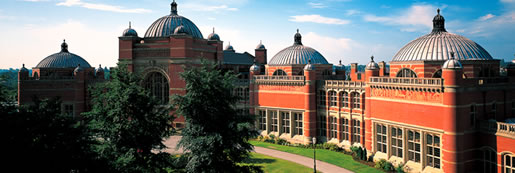
University of Birmingham
Anna
The RMA Research Students’ Conference was a great experience. With as many as five parallel sessions at a time, there was a significant number of students and lots of interesting papers on subjects as diverse as music in video games and Egyptian hip-hop.
I particularly enjoyed Monday’s session, ‘Music in 18th and 19th Century Britain’, where papers included an examination of the 1842 English production of Semiramide (Catherine Hutchinson) and a discussion of national identity as imagined in the programme notes of the Crystal Palace Concerts (Bruno Bower). These topics were particularly relevant to me, as my research focuses on opera in nineteenth-century Britain, and it was great to meet others working on similar areas. Another particularly interesting session on Monday was ‘Social Analysis – 20th Century England’ where papers included an examination of music publishing during the inter-war period (Kirstie Asmussen) and a fascinating discussion of Holst’s Indian operas (Zara Barlas).
On Tuesday I enjoyed the session on ‘Opera’, where OBERTO’s Corrina Connor gave an excellent paper on the figure of Strauss’ Prince Orlofsky and another paper offered a fascinating insight into Shostakovich’s Hamlet (Michelle Assay). My own session was ‘Performance in the 19th Century’ on Tuesday afternoon, where I gave a paper on tenor John Braham, examining how he constructed a British identity. Other papers in this session included a consideration of the politicised reception of prima donna Marie Delna (Emma Higgins) and a discussion of Brodsky’s concert career (Geoff Thomason).
My first visit to the RMA Students’ Conference was a great experience – I hope it won’t be my last!
Corrina
Because our interests largely coincide, I found myself at many of the same panels that Anna also attended, and in various ways opera or opera-related papers were prominent in many other sessions. On Wednesday morning in the ‘Analysis – Baroque’ panel, Dionysios Kyropoulous (Cambridge) spoke energetically about ‘Reviving period stagecraft in Baroque opera today’, and drew attention to the fact that in many productions of Baroque operas, the musical aspects (orchestral and vocal) are ‘historically informed’ while the art and rhetorical significance of physical gesture is largely ignored. The next session was the Jerome Roche Prize Lecture, ‘The Turn of the Screw, or: The Gothic Melodrama of Modernism’, given by Christopher Chowrimootoo (who was an OBERTO Early Career Research Fellow last year). His lecture illustrated how Britten’s Turn of the Screw incorporated aspects of gothic melodrama and some of the purer aspects of modernism. I enjoyed especially hearing about the range of critical responses to Britten’s opera after its premiere, and the ways in which critics felt Britten had remained ‘faithful’ to James, or diverged from the source text (to good or disastrous effect).
On Tuesday morning there was a session dedicated to opera, as Anna has described. I was delighted that Charlotte Bentley (Nottingham) was also speaking about operetta in ‘Satire and the status quo: Offenbach’s Grande-Duchesse in Second Empire Paris’. Charlotte emphasised the differences between satire and parody in Parisian operetta, and how the political aspect of operetta functioned as a form of substitute for more open political debate. Opera and politics were also part of Marco Pollaci’s ‘Analyzing Verdi: pedagogic traditions between innovation and politics’. Here we learnt that the Neapolitan system of harmony and counterpoint in which Verdi was educated was so distinctive that Verdi’s use of these pedagogic formulae in his operas were an audibly recognisable political statement. After my own paper, Michelle Assay (Sheffield/Sorbonne) had some useful comments about Russian aristocracy in the early nineteenth century, and their movement throughout Europe.
In addition to hearing so many diverse and fascinating papers, another valuable aspect of attending this conference was to see the different ways in which people presented their research. It is very tempting to cram as much into a conference paper as possible, but I found that I learned the most from those papers in which the speaker dealt with just a few points, but in greater detail. I hope to incorporate what I observed into future presentations.
Opera Tickets for Students
Did you know that both the Royal Opera House and English National Opera offer brilliant benefits for students, with many cheap tickets available?
The Royal Opera House runs a fantastic Student scheme – free for all students to sign up to online. Once they are registered students get an advanced booking period, making it easier for them to purchase cheaper seats before they go on general public sale. In addition, 20 of the cheapest seats for every performance are now reserved for students only – these can cost as little as just £4! There are also several dedicated student performances every season, and students are offered discounts at the bar and on programmes. In addition, the ‘Student Standby’ scheme offers unsold tickets to performances for just £10. Student booking for the Spring season opened at 10 am this morning – sign up quickly to get tickets for some fantastic productions!
English National Opera has a scheme called Access All Arias for students and those aged under 30. Under this scheme, students are able to buy heavily discounted tickets for every performance – these cost as little as £10 each. Programmes are also half price and cheap, last-minute tickets are often made available.
Opera at the AMS by Alexandra Wilson
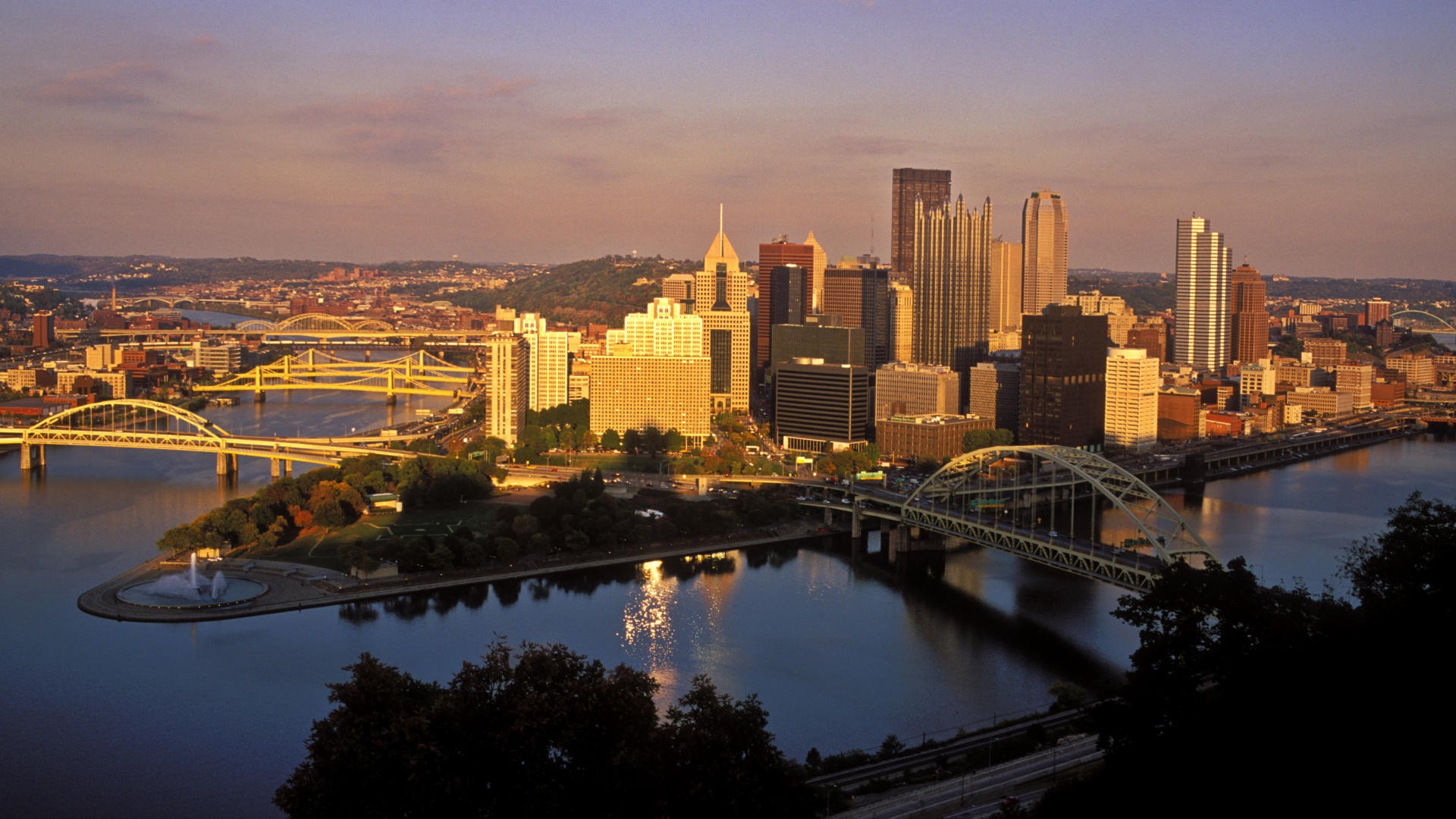
The Annual Meeting of the American Musicological Society (AMS) is arguably the most important event in the musicological calendar. Thousands of scholars from around the globe visit a major American city each November in order to debate the latest research in the field. A huge array of papers can be heard in around nine parallel sessions and there are also plentiful opportunities to hear performances, to browse the bookstall and to network. And so, this year, to Pittsburgh.
The AMS is a generalist conference, with sessions titles this year as diverse as ‘Institutional Cultures in the Middle Ages’, ‘Nineteenth-Century Instrumental Music’, ‘Performance and Aesthetics in Popular Music’, and ‘European Film’. Nevertheless, it would have been possible to construct a personal conference schedule comprising nothing but opera, by choosing from sessions on ‘Opera Displacements’, ‘French Opera, Entrepreneurs and Culture, 1870-1930’, ‘Materializing Puccini’, ‘Restaging Opera’, ‘Opera and Voice in Nineteenth-Century France’, ‘Producing Minimalist Opera’, ‘French Opera, 1680-1790’ and ‘Revisiting the Risorgimento’. So extensive was the operatic programming that several of these sessions clashed with one another and, indeed, with opera-focused papers elsewhere on the programme. (Particularly frustrating, from my perspective, was the scheduling of the ‘Materializing Puccini’ session against the ‘Audio Vision’ session in which my own paper on the use of Puccini’s music in period film had been placed.)
The AMS offers a fantastic opportunity to catch up with the latest developments in your own area of research – or, indeed, to go and learn about something entirely new. This year I opted primarily for the latter approach. Yet even in papers on ostensibly non-operatic topics, opera had a way of making its presence felt. For instance, in a paper by Trevor Herbert (Open University) on music and the British military in the nineteenth century, we learnt about boys plucked from orphanages to be trained as military musicians who would go on to spawn sons of great operatic and theatrical repute (including the tenor Sims Reeves and the composer Sir Arthur Sullivan). Peter Kupfer (Southern Methodist University), meanwhile, drew upon a wide-ranging and fascinating survey he had undertaken of music in American advertising in order to observe that opera is the genre of music used by far the most often for purposes of humour and parody. And Jonathan Glixon (University of Kentucky) whisked his audience away to Baroque Venice, discussing the competing musical delights, both operatic and sacred, that featured in eighteenth-century Venetian guidebooks.
The AMS provides a snapshot of the current musicological discipline in all its rich diversity. Nevertheless, opera’s prominence year after year on the AMS programme is striking and speaks both of its centrality to the discipline and of the ever-expanding array of interdisciplinary critical approaches that scholars from musicology and beyond are taking to the art-form.
Wandering Minstrels: Travelling Opera in Britain – Conference Report
On 26 October, a group of OBERTO staff and students attended the ‘Wandering Minstrels: Travelling Opera in Britain’ study day at the Royal Academy of Music. Here are some of their responses to the day.
MA student Pauline Galea writes:
I particularly enjoyed Dr Paul Rodmell’s session on ‘Unsung Heroes, 1875-1919’. His overview of the range of touring opera companies in England during that period, their repertoire and their performing schedule, painted a very vivid picture of the importance of the touring system. It was interesting to note that opera companies then, as now, needed to maintain a balance of producing ‘old favourites’ to bring in the revenue, but also regularly commissioned new works, and also that the principal language for touring companies was English, with the attendant requirement to arrange translations.
MA student Anna Koukoullis writes:
I was most drawn to comments made by Dr John Ward, who presented a paper on the history of the Carl Rosa company. This was particularly interesting as it discussed Rosa’s thoughts not only on repertoire, but production issues. Dr Ward was able to show us a primary source that contained a sketch of the vision Rosa had for the staging of a particular project. Touring opera companies often find their ambitions for the staging of a work limited by being on the move, and performing in a variety of venues of differing size. This inspired me to ask the question, how does touring limit what companies can do visually and dramatically on stage? And do these limitations affect how they bring opera to the masses?
 Carl Rosa
PhD student Anna Maria Barry writes:
The most interesting session for me was ‘English Touring Opera and the Impact of Cinema Broadcasts’. This paper concerned a research project that is currently underway examining the fast-growing trend for operatic cinema broadcasts and the impact this may be having on the audiences for live opera. English Touring Opera traditionally serves audiences in towns and rural communities where live opera is not available. Now, however, the majority of these communities are able to access world-class cinema broadcasts from the Met and the Royal Opera House. The research project is surveying audiences in order to learn more about the perceived advantages and disadvantages of opera in the cinema. It is hoped that the results will allow English Touring Opera to adapt to a changing marketplace for opera. Although the project is still ongoing, initial audience responses raise some interesting and surprising questions about the nature of live performance.
Alexandra Wilson writes:
A highlight of the day was Professor Katherine Preston’s keynote paper about the tours made by British opera troupes to the US during the long nineteenth century. I have written about a concert tour that the Italian-American soprano Amelita Galli-Curci made to the UK during the 1920s, so it was interesting to learn how the process worked in reverse. Professor Preston gave a vivid account of the challenges that opera singers faced on the road, the alternating fads for Italian and English opera in nineteenth-century America, and the surprisingly important role that was played by women in setting up and managing operatic troupes.
Liszt, the Forgotten Kapellmeister: A Reassessment by Dr Joanne Cormac
In 1848 Liszt made the controversial decision to give up a highly successful and lucrative career as a touring virtuoso to take up full-time the role of Kapellmeister of the small, Weimar court orchestra. His critics could not have known that he was about to embark on arguably the most fruitful period of creativity of his entire life. The symphonies, symphonic poems, piano works and oratorios from that period are now well known,but Liszt’s work as director of the court theatre and his contribution to the history of opera are still largely unfamiliar.
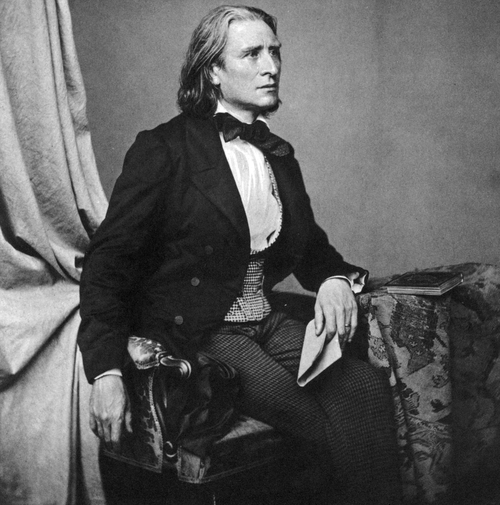
In many ways, Liszt and Weimar were unsuited. The traditions of the court were stuck in the past, particularly in their treatment ofmusicians. Liszt saw artists as priest-like figures with an important role to play ineducating society. Grand Duke Carl Friedrich, on the other hand, saw artists as members of the payroll.They were required to wear uniforms, they would fulfil commissions for court birthdays, anniversaries and other celebrations, and they would entertain the court or give music lessons when desired. In this respect, Liszt’s position was not so different from Haydn’s at the court of the Esterházy family almost a century earlier. Nonetheless, Liszt insisted on retaining the title, Kapellmeister in Extraordinary, which allowed him some freedom from Weimar. He described his position as ‘voluntary’ and only received a modest, sporadic salary. All of this allowed Liszt freedom from Weimar for extended periods when he would leave the theatre in the hands of a deputy.
Despite quarrels with other members of the artistic staff, the mediocre orchestra and dismal chorus (amusingly described by Berlioz in 1841 as‘a rabble of unimaginable incompetents, bawling their way through the score with a contempt for the conventions of pitch and rhythm such as I have never heard equalled’) and despite the miserly attitude of Grand Duke Carl Friedrich towards funding the arts, Liszt’s achievements were considerable. He took risks in programming new works, providing an important platform for contemporary composers. The premiere of Lohengrin was given by Liszt in Weimar at a time when Wagner struggled to persuade theatres anywhere to stage performances of his work. Liszt also gave early performances of Tannhäuser, Der fliegendeHolländer, Schumann’s Manfred, Genoveva and Scenes from Faust, and Berlioz’s Benvenuto Cellini among many others.
Perhaps less well known is the role Liszt played in nineteenth-century Gluck rehabilitation. Wagner, Berlioz, and Strauss are often associated with 19th-century Gluck revivals. Nonetheless, Liszt mounted an earlier revival of Orphéein Weimar,“updating” the opera with his own music, whilst at the same time attempting to stay true to Gluck’s orchestration choices and style. In his published writings, Liszt was also an early voice in the growing ‘authenticity’ movement, and he was instrumental in publicly decrying outdated performance practices, such as entr’actes. In the 19th century it was common for a soloist or an orchestra to play a short movement in between the acts of a play or opera, whilst the audience happily chatted away. Liszt, having experienced this from the perspective of both performer and conductor, despised the practice. Perhaps most importantly, however, he contributed to increased rigour in performance standards with his meticulous rehearsals. He took piano rehearsals, coaching the singers individually, he took sectionals at time when this was uncommon to say the least, and he worked closely with the Regisseur and the composer (where possible) overseeing almost every aspect of production.All of this repositions Liszt as a formidable influence on theatre practices whose legacy deserves to be reassessed.
‘Staging Operatic Anniversaries’ – Conference Report by Dr Alexandra Wilson
OBERTO 2013: Staging Operatic Anniversaries
2013 is a year of key operatic anniversaries, marking, amongst others, the bicentenaries of Giuseppe Verdi and Richard Wagner and the centenary of Benjamin Britten. Rather than focus upon the music of an individual composer for our 2013 conference, we decided to interrogate the mechanics of operatic anniversary celebrations past and present, in keeping with the historiographical focus of past OBERTO conferences. ‘Staging Operatic Anniversaries’, held at Brookes on 10 September 2013, brought together scholars from the UK, America, Germany and Italy, postgraduate and undergraduate students, opera critics, and members of the music industry.
The first session of the day, ‘Institutional Politics’ (chaired by Francesca Vella, KCL) opened with a paper by Giuseppe Montemagno (Catania) surveying the Verdi celebrations of 2013 at La Scala, with productions of his operas from Oberto, Conte di San Bonifacio to Falstaff. Marianne Betz (Hochschule für Musik und Theater Leipzig) then looked back a century to examine the rejection by a no less august opera house, the New York Met, of an intriguing opera on the ever-topical theme of immigration, George Whitefield Chadwick’s The Padrone.
The second session, ‘Shifting Memorialisation’ (chaired by Adeline Mueller, New College, Oxford) explored how the commemoration of individual composers changes over time, demonstrating how anniversaries can serve as useful reference points in composers’ reception history. Corrina Connor (Oxford Brookes University) examined four significant dates – 1925, 1974, 1975, and 1999 – in the ‘afterlife’ of Johann Strauss and in so doing raised important broader points about the simultaneous reception of composers as artists and as ‘brands’ ripe for commercial exploitation. Erik Levi (RHUL) explored how Germany and Austria marked key Mozart anniversaries in 1931 and 1941. Levi drew upon a rich array of primary-source documents in order to demonstrate the diverse and in many cases outrageous ways in which composer anniversaries have been hijacked for political ends.
The conference took on a different pace after the lunch break, when Jamie McGregor (Rhodes University) performed his one-man show, ‘Wagner Reading Wagner’. Complete with tail-coat, waistcoat and period facial hair, McGregor recreated one of the soirées in which Wagner read his libretto aloud to gatherings of friends and supporters in what were clearly staged performances, exercises in self-promotion designed to attract and educate audiences in advance of the completed work. McGregor’s reading from the libretto of Tannhäuser was followed by an opportunity to listen to the scene in question and thence a lively discussion about McGregor’s project chaired by Russell Burdekin (Oxford Brookes).
Jamie McGregor’s act, ‘Wagner reading Wagner’
(Note: this was not filmed at the OBERTO conference)
The fourth session of the day, ‘Monumentalisation and Commemoration’ (Chair, Peter Franklin) retained a primarily Germanic slant. Matthew Werley explored the idea of historicism in Wagner’s Die Meistersinger von Nürnberg within the context of recent academic debates about monumentality. This was followed by a paper by Mark Berry (RHUL) on this year’s Wagner celebrations in Germany, which have in many respects adopted an anti-monumental stance. Berry examined attempts to reclaim Wagner as a ‘Saxon’ composer and a shift of interest from the composer’s later to his earlier career. The importance of place in the celebration of anniversaries was summed up by Hugo Shirley (Oxford Brookes) in the last paper of the day. Hugo analysed a range of contrasting anniversary celebrations from 2013, including a production of Britten’s Peter Grimes on Aldeburgh Beach, a Verdi box set emphasising the composer’s links with Parma, and irreverent Wagner graffiti in Bayreuth.
The conference closed with a discussion involving all delegates chaired by Alexandra Wilson (Oxford Brookes) about the broader historiographical themes the conference had raised. The discussion was wide ranging, covering the politics of historical tourism and the commercialisation of anniversaries; anniversary celebrations that have spectacularly failed; and the ways in which anniversaries play a vital – and laudable – role in building audiences for music from the past.
V&A Theatre and Performance Archives by Anna Maria Barry
The V&A is renowned for its world-famous collections of art and design, but perhaps you didn’t know that it also houses a substantial Theatre and Performance Collection. This fantastic collection contains everything from costumes, architectural plans and financial records to portraits, playbills and even puppets!
From 1987 these collections were housed at the V&A’s Theatre Museum in Covent Garden, but unfortunately this was forced to close in 2007 due to a lack of funding. In 2009 the V&A Museum opened its dedicated Theatre and Performance Galleries, where many of the collection’s highlights are on permanent display. However, much of the material remains in storage. The good news is that all of this material can be accessed through the V&A’s Theatre and Performance Archives which are held on a separate site in Kensington Olympia. Over the summer I have been using these archives for my PhD research, and am pleased to report that they hold a great deal of material relating to opera. I will share a brief summary of my experiences, in the hope that it will be useful to others who wish to navigate this brilliant collection for operatic research.
My current research concerns the British opera singer John Braham (c. 1774 – 1856), so I began my exploration of the V&A collections by searching for him in the collection database. This database only contains the part of the Theatre and Performance Collection that can be classified as objects and works of art – the V&A defines such items as “costumes, paintings, designs, ceramics and other museum objects.” A search for John Braham offers three pages of results (mainly portraits) with high quality images and further information on each item.

John Braham as Don Alfonso
V&A Theatre Archives
My next step was to search the National Art Library Catalogue where archives, books, manuscripts and audio-visual items from the collection are listed. A search for John Braham produces various results, including playbills and sheet music. I also searched for the names of his productions, which produced further results; it is always a good idea to search around your main subject! The Theatre and Performance Collection contains many archives of institutions and individuals; they are all recorded in the National Art Library Catalogue, but the most important of these are also listed in greater detail here, so it is worth looking through this list too.
My final step was to visit the Theatre and Performance Archive in Olympia. A conversation with a very helpful archivist had made me aware of the ‘Production Boxes’ held at the Archive. I was advised that for every theatre in London (and many major theatres in the provinces) the Archive holds a box for each year it was active. I wanted to find out which roles John Braham had performed at different points during his career; although I knew which dates he was working at certain theatres, I did not know which performances he had been in. So I requested, for example, the box for ‘Theatre Royal 1811’.

Playbill for John Braham’s Benefit Night, Theatre Royal, 1811
V&A Theatre Archives
These huge boxes contain a seemingly random range of different materials relating to the productions in a given year. The boxes I looked at contained a huge number of playbills covering almost every single day of the year in some cases. These playbills always featured a cast list, so they allowed me to find out which roles John Braham had performed on given dates. The playbills for some performances, such as the one above, list additional popular songs that Braham had chosen to perform in addition to the main performance. In some boxes I was also lucky enough to find items such as reviews, contemporary accounts of performances and even a few images.

Catalani and Braham share a bill – Theatre Royal, 1807
V&A Theatre Archive
My research has only used a selection of the Theatre and Performance Collections; there is so much more material to explore. The V&A offer their own advice on Researching Theatre and Performance and also have a whole section of their website devoted to opera; this contains a range of useful articles and reading lists.
MA Funding
Applicants to the MA in Music at Oxford Brookes University have the opportunity to apply for various Brookes bursaries to support their studies. The closing date for these awards is Friday 28 June 2013.
For further details visit http://www.brookes.ac.uk/studying-at-brookes/finance/postgraduate-finance—uk-and-eu-students/sources-of-funding-for-postgraduate-uk-and-eu-students/ and follow the links to the John Henry Brookes, Faculty Taught Masters Scholarships and Santander awards.
Applicants must have a place on the course before applying for the funding. If you are interested in applying to the course and being considered for funding, please contact Alexandra Wilson at the first opportunity.
 OBERTO