


At the 2023 OBERTO conference dedicated to the topic “Opera and Money”, singer Mimi Doulton opened the panel discussion with the following impassioned plea about the essential role freelancers play in theatres and operas in the UK.
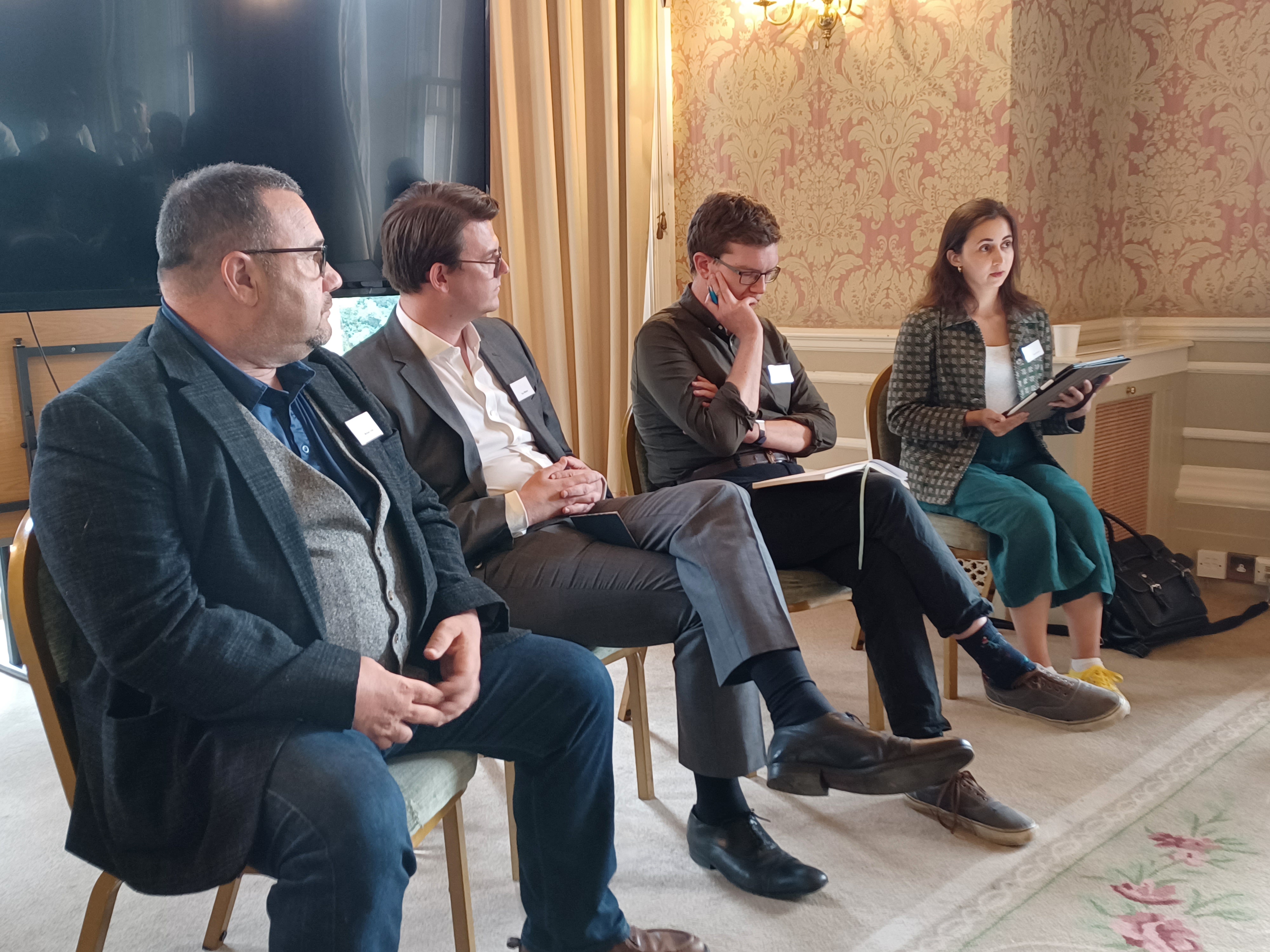
2023 OBERTO conference.
Freelancers make up an estimated 70% of the theatre and opera workforce in the UK. We are vital to the survival and day-to-day functioning of this industry. And yet, the freelance workforce is in crisis. I need you to care about that, because if there are no freelancers, there is no opera in this country.
For people in this room who might not have been freelance for some time, let me remind you of its realities. We get no sick pay, no maternity leave, no pension, and no paid holiday. We very rarely have access to HR or childcare support, we often work more than five days a week, our overtime and our preparation time is usually unpaid.
To calculate our fees on the assumption that we are under contract 48 weeks a year, like a person in full-time employment, is a fantasy. Memorising roles and developing concepts takes time between contracts. And although nobody sees us turning up to work in this time, I promise that we are investing time, and quite often money, in making sure we do a good job.
Our fees need to take all of this into account.
Do they? Let’s look to the 2023 Big Freelancer Survey and see if we can find some answers.
The average income for freelancers working in opera is 11% under the UK average income. We are underpaid.
There is a gender pay gap of 28% for opera freelancers. Women – on average – are earning below minimum wage. We are paid unfairly.
The average income does not change whether you have 10, 20 or 30 years’ experience in this industry. In fact, it goes down a little. We have little hope of salary progression.
68% of opera freelancers report feeling that their work is quite or very insecure. 68% of opera freelancers earn less than half of their income from actually working in opera. We have chronic job insecurity.
78% of London-based opera freelancers are earning less than the average London rent. That is just rent – no other costs. 61% are earning less than the London Living Wage. They could literally make more money working in a posh coffee shop. We cannot afford to live on what you are paying us.
Five to eight years of expensive training, followed by badly paid or unpaid young artist schemes and apprenticeships, to develop highly specialised skills that I know everyone in this room appreciates. And for what? Low and unequal pay, irregular work, chronic job insecurity, no salary progression, and less than a basic living wage.
Why is this important?
As long as we refuse to tackle these economic barriers, there is no point in talking about diversifying this industry. Because, taking everything I have just said into account: if you met a 17-year-old tomorrow who was trying to decide whether to train – let’s say as a singer – but did not have access to private means or family wealth, and did not have access to free or subsidised property in a major UK city, and did not yet have access to the circle of elite donors that hover on the edges of our industry – would you really encourage them to go to conservatoire in good conscience? Would it be moral to encourage them to choose this life of insecurity and financial struggle, where the average person cannot afford rent, let alone pets or children on what they are being paid?
If you did encourage them to make that choice, yes, they might be exceptionally lucky. But chances are that ten years down the line they’ll be working three part-time jobs alongside their singing. Burning out, with little time to practice or progress, watching their wealthier colleagues sail through with infinite access to money to pay for coachings, travel to auditions, and application fees.
If you look at what people say they want from the Big Freelancer Survey, they aren’t actually asking much. 5 day weeks, paid overtime, sensible workloads, access to HR, fair pay. These are all things that are taken for granted in other sectors in this country. It is laughable that that is what we are asking for.
If you care about art, if you care about artists, if you care about diversity as you all say you do; then let’s sort this out. Let’s start viewing union minimums as just that – minimums – let’s stop exploiting people, let’s stop talking, and then let’s actually do the work to make it possible for anyone to work in opera.
To quote one survey respondent: Working in this industry over the last year has been: ‘an exercise in being undervalued, having my experience ignored, being taken advantage of and being made to feel that to push back is to risk my livelihood’.
Another says, ‘I’d like to feel valued, instead of a necessary but begrudged expense, and to quote a third person, ‘I’d like to not feel like some kind of monster for asking for a half-decent fee from a major national house’.
What do we want?
The path we are on. There is an alternative.
We are not responsible for solving these problems. We are telling you what they are and it is your duty to sort them out.

Freelancers Make Theatre Work, or FMTW, was founded during the Covid-19 pandemic to represent the voices of freelancers in our industry, who make up an estimated 70% of the theatre workforce. In more recent years it has become our role to educated both our industry and the wider public about two things: firstly, that the freelance workforce is vital to the survival of the theatre industry. Secondly, that the freelance workforce is in crisis.
How do we know this? One thing that the pandemic highlighted was the staggering lack of data that exists about freelancers, and so we decided to start creating that data. Every year we run a Big Freelancer Survey, collecting the important information.
You can follow FMTW on X (Twitter): @FreelancersMake
If you want to learn more about the 2023 survey, you can access it here: Big Freelancer Survey Report 2023
 OBERTO